The Science Behind ASEA
Explore the clinical studies, published research, and scientific resources that support our ASEA products. Learn, share with confidence, and help others better understand the science.
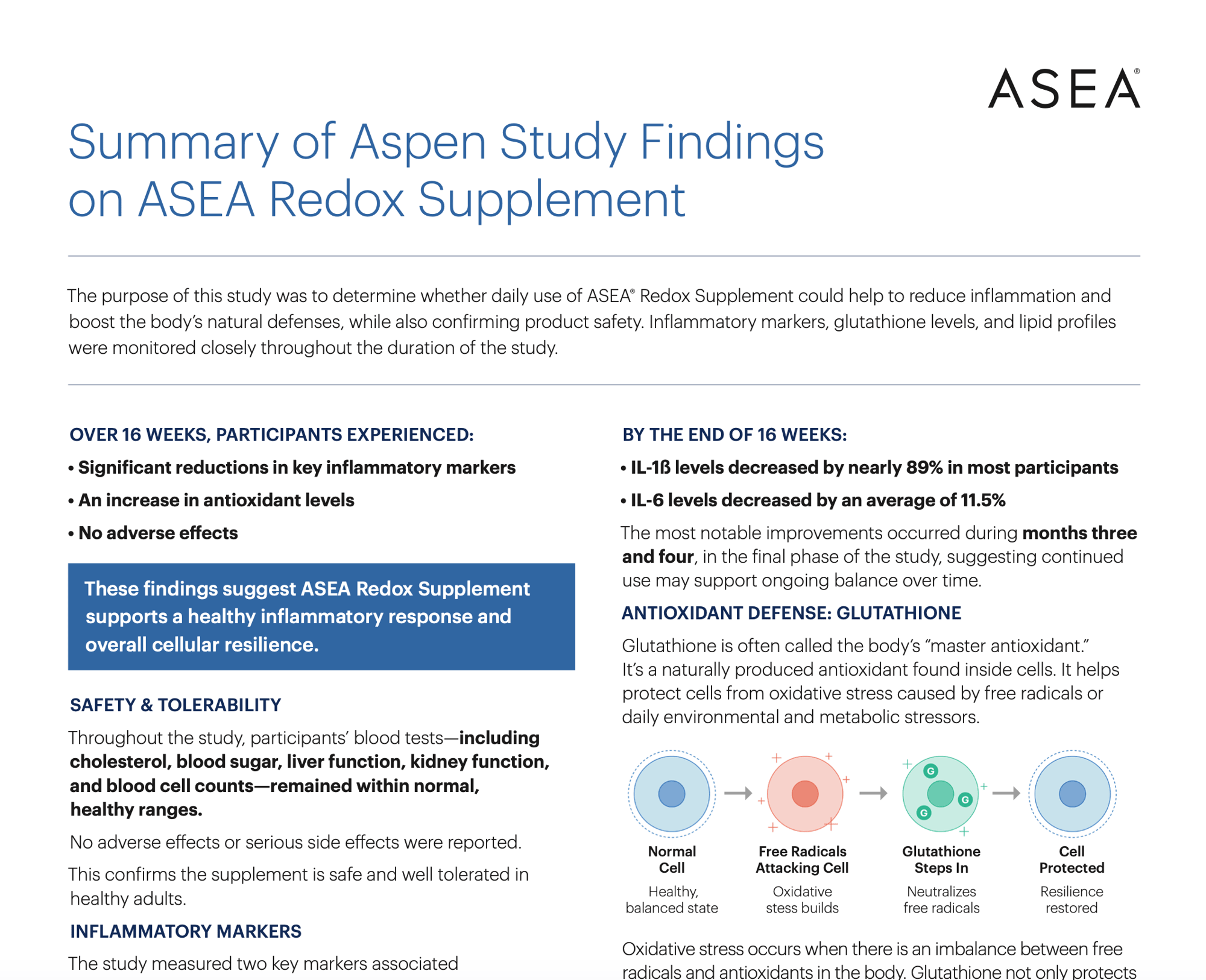
Aspen Study
A 16-Week Open-Label Trial Evaluating the Safety and Effects of ASEA Redox Supplementation on Inflammatory and Antioxidant Biomarkers in Healthy Adults
This 16-week clinical study evaluated the safety of daily ASEA REDOX supplementation and its effects on inflammatory biomarkers, antioxidant status, lipid profiles, glucose metabolism, and other standard clinical health measures in healthy adults.
View the full study or summary to learn more about the research—and feel free to download and share it with those interested in the science behind ASEA.
Taueret Labs Study
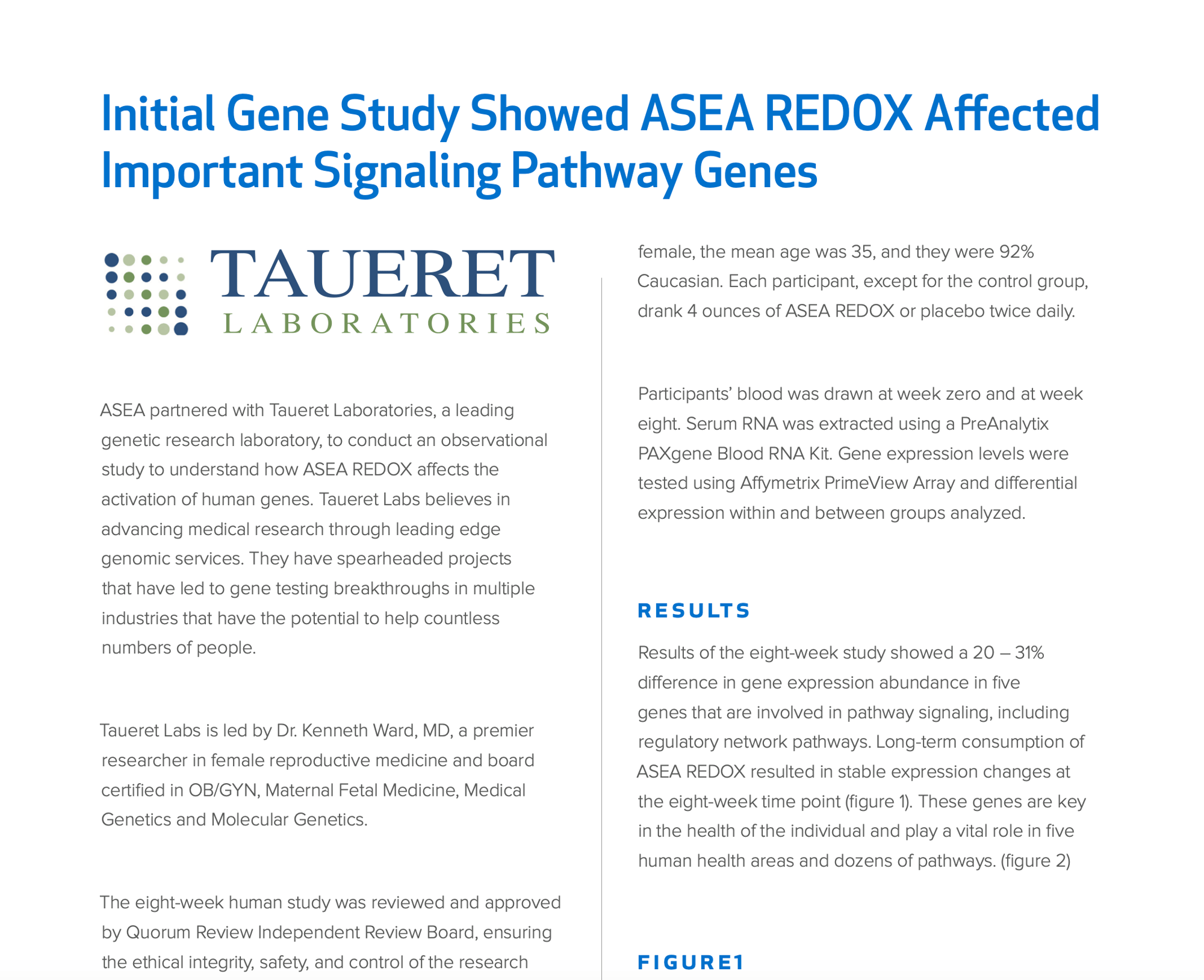
Initial Gene Study Showed ASEA REDOX Affected Important Signaling Pathway Genes
ASEA partnered with Taueret Laboratories to conduct an observational gene expression study exploring how ASEA REDOX influences the activation of human genes.
View the findings to learn more about the signaling pathways examined and the results from this early genetic research.
Nrf2 Pathway
In Vitro Effect of Redox Signaling Molecules on Regulating the Nrf2 Pathway
Independent research conducted by the University of Bath and Western Sydney University examined how redox signaling molecules affect the Nrf2 pathway in laboratory cell models.
Learn more about the pathway’s role in the body’s response to cellular stress and what the research observed.
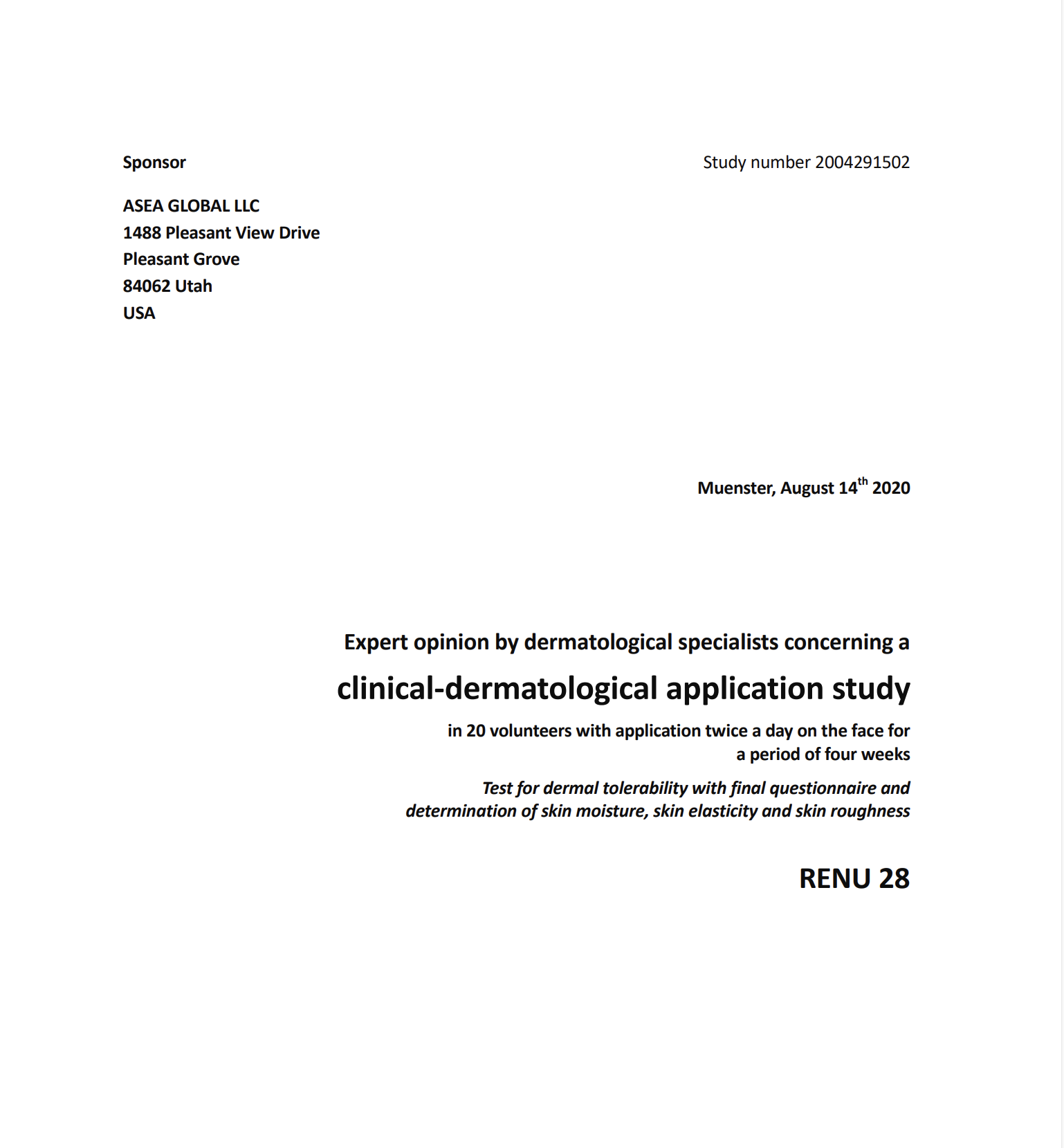
Dermatest: RENU28®
Expert opinion by dermatological specialists concerning a clinical-dermatological application study.
RENU 28 underwent a four-week, dermatologist-supervised clinical study to evaluate its skin tolerability and effects on hydration, elasticity, and skin roughness. The study found the gel was well tolerated by participants, with measured improvements in all three areas, offering objective insight into its cosmetic performance.
See how RENU 28 performed in dermatologist-supervised testing.